
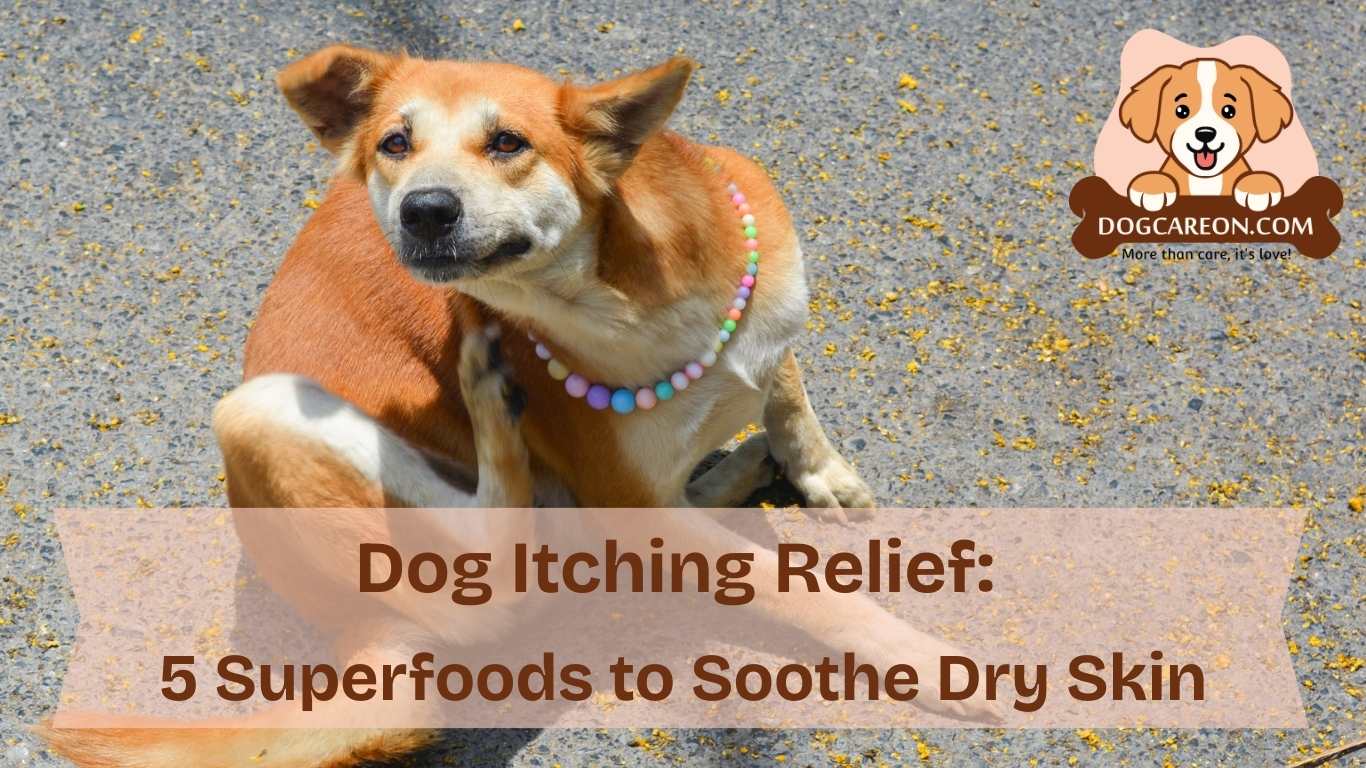
Dog Itching Relief is something every dog owner desperately searches for at some point. It’s one of the worst feelings to see your dog scratch themself raw at 3 a.m. You may have tried pricey shampoos, paid a lot of vet bills, or bought things that cost more than your personal skincare routine, but the itching never really goes away.
After years of scratching all the time, I learned that the real answer wasn’t merely in bottles or medicines. It was in the kitchen. The slogan “5 Natural Superfoods to Relieve Dry Skin Fast” isn’t just catchy; these meals really help since they treat the source, not just the symptoms. Your dog’s sensitive skin needs food from the inside, much like dry lips won’t get better with lip balm alone.
Understanding Why Your Dog Itching Problem Starts

Before we get to the fun part, let’s talk about why your dog is scratching in the first place. To find the correct remedy, you need to know what causes your dog’s itching. And believe me, it’s not always just one thing.
Common Causes of Dog Itching and Dry Skin
Seasonal heaters? Harsh on skin. Someone usually heats it up in November, and their dog sheds snowflakes in December. It happens annually. Not dry skin. They itch due to dry skin.
Time for a bath. I understand. Your dog rolled in something bad at the park. Showering too much can dry skin, but few people recognize this. When you bathe your dog, you remove its protective oils. Clean your hands 50 times a day and they’ll break.
If you have time, may we discuss nutrition? Gravy-soaked cardboard is better than most store-bought dog food. Problem: They lack fatty acids to stop your dog from scratching. Dog skin cells need omega-3 and omega-6 fatty acids to form a barrier. Not an issue.
Also, allergies matter. Your dogs always lick their feet? Dogs itch more from allergies than dry skin. Food allergies, pollen, and bed detergent can accumulate.
The Skin Barrier and Why Nutrition Matters
Here’s where it gets interesting. Your dog’s skin is basically a brick wall, and those bricks are held together by fats. When your dog doesn’t get enough of the right fats in their diet, those bricks start crumbling. Water escapes. Irritants get in. The whole system falls apart.
This is why throwing more coconut oil shampoo at the problem doesn’t really work long-term. You need to rebuild that wall from the inside. And that means food.
The superfoods I’m about to share with you contain the exact nutrients your dog needs to repair their skin barrier, calm down inflammation, and actually hold onto moisture. We’re talking omega fatty acids, zinc, vitamins A and E, collagen—all the building blocks that stop dog itching and promote healthy skin.
The 5 Natural Superfoods That Stop Dog Itching Fast
Superfood #1: Salmon and Fish Oil
Okay, if you do nothing else from this article, please just add fish oil to your dog’s diet. Seriously. This stuff is magic.
How Omega-3 Fatty Acids Work
Fish oil—specifically the omega-3s EPA and DHA—works like a fire extinguisher for inflammation. And dog itching? That’s basically inflammation having a party on your dog’s body.
I’ve watched dogs go from scratching themselves bloody to barely itching at all within two months of adding fish oil. The omega-3s literally get incorporated into your dog’s cell membranes and change how their body responds to irritation. Less inflammation means less dog itching. Less itching means happier dogs (and more sleep for you).
Plus, have you ever seen a dog that takes fish oil regularly? Their coat looks like they just came from a doggy spa. Glossy, soft, thick. It’s honestly impressive.
Practical Implementation
You’ve got two options here. Fresh salmon is great—just cook it thoroughly (no seasoning!) and give your dog about an ounce per twenty pounds of body weight, two or three times a week. My dogs go absolutely nuts for salmon. It’s like Christmas morning every time.
But honestly? Fish oil supplements are easier for most people. Look for ones made specifically for dogs, not the human ones from Costco. You want at least 300mg of combined EPA and DHA per capsule.
Start low and go slow. Maybe half the recommended dose for the first week, then build up. And here’s a pro tip: keep that bottle in the fridge. Fish oil goes rancid fast, and rancid fish oil is worse than no fish oil at all.
Dosing typically runs about 20-55mg of combined EPA/DHA per pound of body weight daily. So a thirty-pound dog might need around 600-1500mg total. Yeah, it’s a range. Every dog is different.
Superfood #2: Coconut Oil
Coconut oil is having a moment, and for once, the hype is actually deserved.
Internal Benefits
When your dog eats coconut oil, they’re getting these things called medium-chain triglycerides. I won’t bore you with the chemistry, but basically, they’re fats that your dog’s body can use really quickly for energy. And one of them—lauric acid—fights off bacteria, fungi, and viruses.
Think about it this way: coconut oil supports your dog’s immune system from the inside, which means their skin can focus on being skin instead of constantly fighting off invaders.
It also helps them absorb other nutrients better, especially fat-soluble vitamins like A and E. So the coconut oil actually makes all the other good stuff you’re feeding them work better. Pretty cool, right?
Topical Application
Got a dry patch that’s driving your dog crazy and causing excessive dog itching? Rub some coconut oil directly on it. I do this with my older Lab mix whenever he gets a rough spot on his elbow. Works like a charm.
The oil creates a protective layer that locks in moisture while also killing any bacteria trying to set up shop in the irritated skin. Just warm it between your hands first so it’s not all greasy and solid.
Dosage and Administration
Start small. Like, really small. Coconut oil can cause diarrhea if you go too fast, and nobody wants that situation.
For small dogs under fifteen pounds, start with a quarter teaspoon daily. Medium dogs can handle a teaspoon. Big dogs get a tablespoon. Mix it into their food, smear it on a lick mat, or do what I do—freeze it in ice cube trays for summer treats.
Give it a week or two before you increase the amount. Your dog’s digestive system needs time to adjust. Trust me on this one. Learn from my mistakes.
Superfood #3: Sweet Potatoes
Surprised to see sweet potatoes on this list? Most people are. But these orange powerhouses are absolutely loaded with skin-healing nutrients.
Nutritional Profile for Skin Health
Sweet potatoes are packed with beta-carotene, which your dog’s body converts into vitamin A. And vitamin A? That’s basically the skin regeneration vitamin. It helps your dog grow new, healthy skin cells and keeps their skin from drying out.
They’ve also got vitamin C, which works with vitamin E to protect skin cells from damage. Plus B6 for protein metabolism, and a ton of fiber for gut health.
Wait—gut health? For skin problems?
Yes. Absolutely yes. Your dog’s gut and their skin are connected in ways we’re only starting to understand. A healthy gut means less inflammation everywhere, including the skin. Sweet potatoes feed the good bacteria in your dog’s gut, which then produces compounds that calm down inflammation throughout their whole body.
It’s all connected, see?
Preparation and Serving
Always cook sweet potatoes before feeding them to your dog. Raw ones are too hard to digest. Bake them, steam them, boil them—whatever works for you. Just don’t add butter or brown sugar or any of that stuff we humans like. Plain is perfect.
I usually bake a bunch on Sunday and keep them in the fridge all week. Then I just mash up a bit and mix it into my dogs’ food. A thirty-pound dog can handle a quarter to half cup of mashed sweet potato.
You can also make dehydrated sweet potato chips as training treats. My dogs think they’re getting something amazing, and I know they’re getting nutrients. Win-win.
Just watch the portions if your dog needs to lose weight. Sweet potatoes do have carbs, so you might need to cut back on their regular food a bit to compensate.
Superfood #4: Pumpkin Seeds
Pumpkin seeds are seriously underrated. These little guys punch way above their weight when it comes to skin health.
Zinc: The Skin Health Mineral
Zinc is absolutely crucial for healthy skin. Without enough zinc, your dog’s skin can’t repair itself properly. They’ll get crusty patches, hair loss, infections—the works.
Some dogs, especially certain northern breeds like Huskies, have a genetic thing where they need extra zinc. But honestly, most dogs could benefit from more zinc in their diet.
Pumpkin seeds are loaded with it. Like, seriously loaded. Plus vitamin E, magnesium, and a nice balance of omega fatty acids.
Fatty Acid Balance
Speaking of omega fatty acids—pumpkin seeds contain both omega-6 and omega-3, and they’re in a pretty good ratio. When you combine pumpkin seeds with fish oil, you’re creating this perfect storm of anti-inflammatory compounds that your dog’s skin absolutely loves.
Serving Suggestions
Buy raw, unsalted pumpkin seeds. Roasted is fine too, just no salt. I grind mine in a coffee grinder (one I only use for dog stuff, not my morning coffee—learned that lesson the hard way).
Give your dog about half a teaspoon of ground pumpkin seeds per ten pounds of body weight. So a thirty-pound dog gets about one and a half teaspoons daily.
Just sprinkle it on their food. They’ll barely notice it’s there. I grind up a big batch once a week and keep it in a jar in the fridge. Makes life easy.
Superfood #5: Bone Broth
Bone broth is basically liquid gold for dogs. I know that sounds dramatic, but I’m not exaggerating.
Collagen and Gelatin Benefits
When you simmer bones for hours and hours, the collagen breaks down into gelatin. And gelatin is full of amino acids that your dog’s body uses to make its own collagen.
Collagen is what keeps skin elastic and hydrated. As dogs age, they make less of it, which is why older dogs often have thinner, drier skin. Bone broth helps replace what they’re losing.
I’ve seen older dogs with papery-thin, flaky skin transform after a few months of daily bone broth. Their skin literally thickens up and becomes more resilient. It’s pretty remarkable.
Glycosaminoglycans and Joint Health
Bone broth also contains glucosamine and chondroitin, which most people associate with joint health. But these compounds also help skin hold onto moisture. They’re like little sponges in your dog’s connective tissue.
Mineral Content and Gut Health
The minerals in bone broth—calcium, magnesium, phosphorus—are in this super-absorbable form because they’ve been extracted from the bones. Your dog’s body can actually use them.
And the gelatin? It soothes and heals the gut lining. Remember how I said gut health affects skin health? Bone broth is working on both ends of that connection.
Preparation and Serving
Making bone broth is stupid easy. Get some bones—beef knuckle bones, chicken frames, whatever—and put them in a pot or slow cooker. Add water and a splash of apple cider vinegar (this helps pull the minerals out). Simmer for 12-24 hours.
That’s it. No onions, no garlic, no salt. Just bones and water.
I usually make a huge batch every couple weeks and freeze it in ice cube trays or muffin tins. Then I just pop out however much I need.
Pour it over dry food, offer it as a drink, freeze it for treats—dogs love it no matter how you serve it. Start with a quarter cup for small dogs, half cup for medium dogs, and up to a cup for large dogs.
Nutritional Comparison Table
| Superfood | Key Nutrients | Primary Benefits | Recommended Daily Amount (per 30 lb dog) |
|---|---|---|---|
| Salmon/Fish Oil | Omega-3 (EPA/DHA), Vitamin D, Protein | Anti-inflammatory, strengthens skin barrier, reduces itching | 1 oz salmon OR 1000mg fish oil |
| Coconut Oil | MCTs, Lauric Acid, Vitamin E | Antimicrobial, moisturizing, improves nutrient absorption | 1 teaspoon |
| Sweet Potatoes | Beta-carotene, Vitamin C, B6, Fiber | Supports cell regeneration, collagen production, gut health | 1/4 – 1/2 cup cooked |
| Pumpkin Seeds | Zinc, Vitamin E, Essential Fatty Acids | Enhances skin barrier, wound healing, reduces inflammation | 1.5 teaspoons ground |
| Bone Broth | Collagen, Gelatin, Glycine, Minerals | Hydration, skin elasticity, gut-skin axis support | 1/2 – 1 cup |
Creating a Comprehensive Plan to Stop Dog Itching
Here’s the thing—one superfood is good. All five working together? That’s when the real magic happens.
Balancing Omega Fatty Acids
Most dog foods have way too much omega-6 and not nearly enough omega-3. This creates inflammation, which shows up as—you guessed it—itchy skin.
The ideal ratio is somewhere between 5:1 and 10:1 (omega-6 to omega-3). By adding fish oil and pumpkin seeds to your dog’s diet, you’re fixing that imbalance naturally.
Supporting Gut Health for Better Skin
I keep coming back to the gut because it’s that important. Your dog’s digestive system and their skin are constantly talking to each other through the immune system.
Bone broth heals the gut lining. Sweet potatoes feed the good gut bacteria. Together, they create this foundation of health that shows up in your dog’s skin, coat, energy levels—everything.
Transitioning Your Dog’s Diet
Don’t add all five superfoods at once. Your dog’s stomach will stage a revolt, and you’ll be cleaning up messes you don’t want to think about.
Pick one. Maybe start with fish oil since it’s the most powerful. Give it a week or two, then add the next one. Go slow. Your dog’s gut needs time to adapt.
I usually do fish oil for two weeks, then add coconut oil, then sweet potatoes, then pumpkin seeds, then bone broth. By the end of about six weeks, everything’s incorporated, and I haven’t caused any digestive drama.
Monitoring Progress
Take photos. Seriously. You’re going to see your dog every day, and the changes will be so gradual that you might not notice them. But when you compare a photo from week one to week twelve? Mind-blowing.
Also keep a little journal. How often are they scratching? Are they sleeping better? Is their coat shinier? These details matter.
Most dogs show real improvement by six weeks, with the full benefits showing up around three months. It takes time because you’re rebuilding skin health from the cellular level up. But it’s so worth the wait.
Additional Natural Remedies for Dog Itching Relief
Want to supercharge these superfoods? Here’s what else you can do.
Proper Bathing Practices
Stop bathing your dog so much. I’m serious. Unless they’re actively dirty or have a skin condition that requires frequent bathing, once every month or two is plenty.
When you do bathe them, use a gentle, moisturizing shampoo. Look for oatmeal or aloe. Skip anything with sulfates or artificial fragrances. And please, use lukewarm water, not hot. Hot water strips oils like crazy.
Follow up with a leave-in conditioner if your dog’s skin is really dry. It makes a huge difference.
Environmental Humidity Control
Get a humidifier. Especially in winter. Aim for 40-50% humidity in your home.
I put one in my bedroom because that’s where my dogs sleep, and the difference in their skin every winter is night and day. Plus, it’s good for my skin too, so that’s a bonus.
Regular Brushing
Brush your dog a few times a week. This distributes their natural oils, removes dead skin, and gives you a chance to check for any new problems.
I brush while I’m watching TV. Easy, relaxing, and my dogs think it’s the best thing ever.
Hydration
Some dogs just don’t drink enough water. Add some bone broth to their water bowl. Or get one of those fountain-style water bowls—the running water encourages drinking.
A hydrated dog is a dog with healthier skin. It’s that simple.
When to Consult a Veterinarian
Look, I’m all about natural solutions. But sometimes you need professional help. Don’t mess around if:
- Your dog is scratching so much they’re bleeding or can’t sleep
- The skin is infected (oozing, smelly, hot to the touch)
- There’s significant hair loss in weird patterns
- Your dog seems sick otherwise—lethargic, not eating, acting strange
- You’ve tried everything for three months and nothing’s helping
These superfoods are amazing for general dry skin and mild irritation. They’re not going to cure Cushing’s disease or a severe staph infection. Know when it’s time to call in the experts.
Your vet can run tests, rule out the scary stuff, and work with you on a comprehensive plan. Natural remedies can absolutely be part of that plan, but get a diagnosis first.
Frequently Asked Questions
How to cure dogs’ dry, itchy skin?
Make sure your dog eats a balanced diet that includes omega-3 and omega-6 fatty acids, and groom them often. Use shampoos that are mild and won’t irritate their skin. Don’t bathe your pet too much, and keep them safe from fleas and ticks. If the symptoms don’t go away, see your vet.
Find out more at https://www.akc.org/expert-advice/health/dog-itchy-skin-causes-treatments/ and https://www.petmd.com/dog/general-health/home-remedies-for-dog-itchy-skin
What foods help dogs with itchy skin?
Flaxseed oil, chia seeds, and fish oil are all foods that are high in omega-3 and omega-6 fatty acids. They can help your dog’s skin and coat stay healthy and stop swelling. Dogs, especially those who are fussy eaters, can benefit from eating lean chicken, turkey, or fish. Duck and venison are two new proteins that are also good for dogs. Sweet potatoes, eggs, and pumpkin are good for their skin and give them the nutrients they need.
Coconut oil and probiotics are also good for your skin and stomach. By keeping your skin moist, they can aid with skin problems. Take your dog to the vet immediately away if their itching is particularly bad, won’t go away, or is followed by other concerns like hair loss or sores. They could need special care for a health problem they already have.
What can I feed my dog to stop scratching?
If your dog won’t stop scratching, add foods high in omega-3s, such fish or a little fish oil, to their meals. These healthy fats might help soothe skin that itches. You might also try new proteins like duck or venison and add sweet potato or pumpkin for extra nutrients. But if the scratching doesn’t stop or grows worse, the best thing to do is take the cat to the vet straight once.
What do vets recommend for dog itching?
Veterinarians frequently attempt to diagnose underlying health issues when a dog exhibits persistent itching. Fleas and other insects that could be causing your dog’s severe itching will be the first thing they look for. Even if that isn’t the issue, your veterinarian may recommend that your dog take omega-3 fatty acids (found in foods like fish oil) or use a gentle, hypoallergenic shampoo to maintain good skin.
If you suspect that your pet has food or environmental allergies, your veterinarian may recommend an elimination diet or allergy medication. Your veterinarian may prescribe antibiotics or medicated shampoos if the problem worsens or if you notice any indications of infection, such redness or sores. Consult your veterinarian to determine the most effective method for helping your dog stop scratching, as every dog is unique.
Conclusion
Going right to the point, does your dog constantly itch? There is no magic pill that instantly alleviates dry skin. Instead, you should try 5 natural superfoods. But it’s not a band-aid; it’s an effective remedy that eliminates the source of the problem.
Using these five superfoods—salmon and fish oil, coconut oil, sweet potatoes, pumpkin seeds, and bone broth—happy, comfortable companions with lovely coats and great skin have been brought into the lives of formerly sad dogs. It accomplishes its stated goals. Keep at it; all it takes is patience.
Plus, what’s great? Improving their skin is just the beginning. Every part of your body, including your joints, brain, digestive system, and immune system, will benefit from these meals. This is how it ought to be: a healthy diet benefits the entire body.
Is it going to be the same for all dogs? No. It is necessary to take some pets to the vet when they experience health issues. However, this treatment can transform the lives of the majority of dogs whose dry, itchy skin is caused by environmental factors or a lack of nutrition.
Get a small amount going first. For a month, commit to eating only one superfood. Pay close attention to what transpires. I have a feeling you’ll sneak in the second one before the month is out, because to the noticeable effects you’ll be experiencing.
Care for your dog, and your dog will know it. If they are uncomfortable or their skin hurts, they will be unable to communicate this to you. However, their persistent scratching betrays their discontent. Assist with their recovery. Try eating some of these superfoods. Take a few photographs. Maintain a constant pace.
Your dog may exhibit completely new behavior in three months, at which point you may notify me via email. That kind of correspondence is common to me. I mean, really? They are timeless.
For more detailed information on canine nutrition and natural health approaches, the American Kennel Club has excellent resources check them out https://www.akc.org/expert-advice/nutrition/.
Your dog deserves to be comfortable. You deserve peace of mind. These superfoods can give you both. Get started today.
If you care about your dog’s health as much as I do, you’ll want to read this: Puppy Food vs Dog Food: Most Owners Get This Wrong!. It’s a quick guide that clears up the confusion and helps you make mealtime easy.
1 thought on “Dog Itching Relief: 5 Super foods to Soothe Dry Skin”